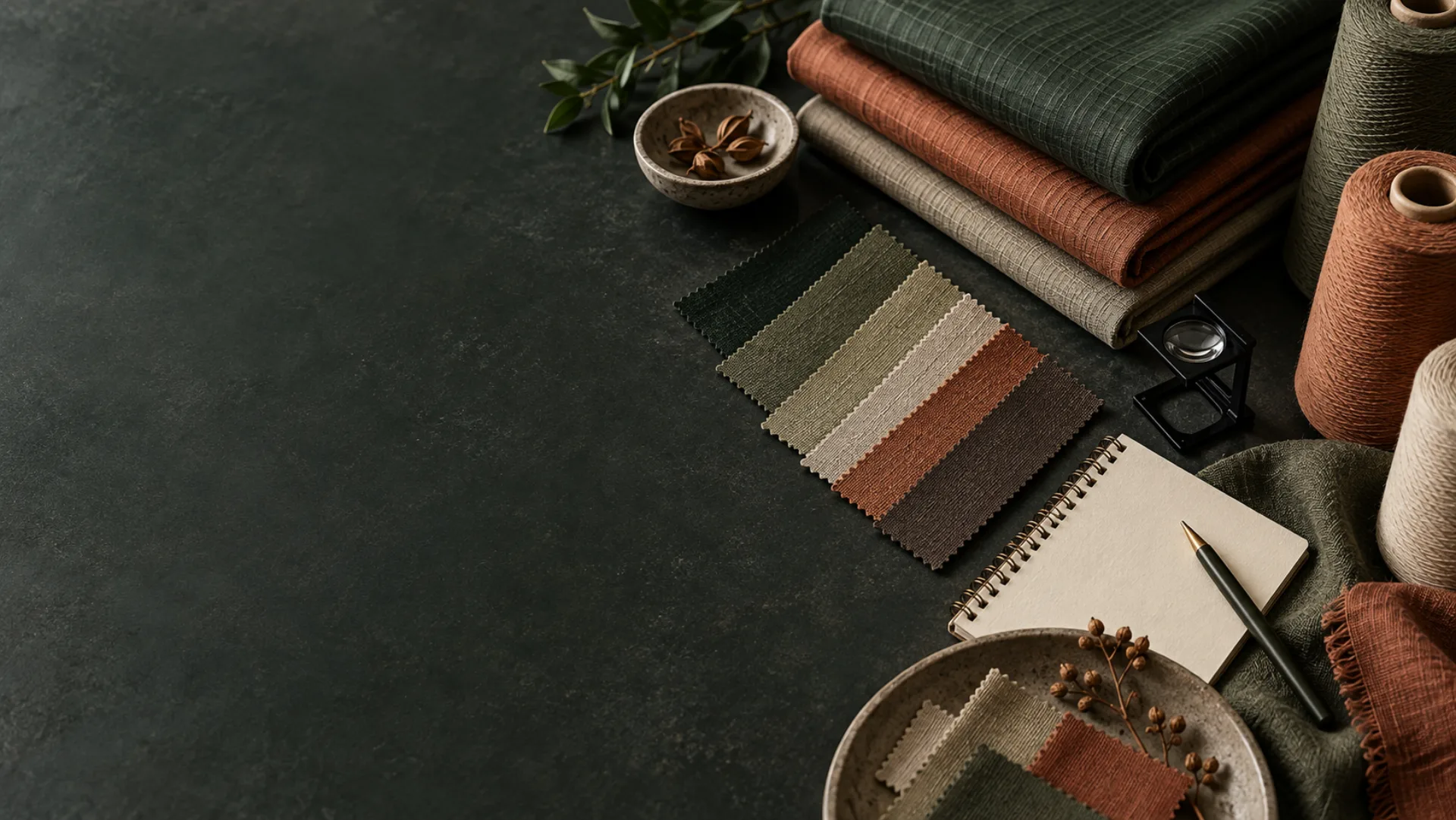
Prepare a polyester Oxford fabric RFQ by identifying the exact reference, recording the finished specification, and separating sample approval from the bulk-order agreement. Use this checklist for bag and home-storage projects when you need suppliers to answer the same questions in a comparable format.
A request for “600D Oxford” leaves the color, backing, width and approval requirements unresolved. Start with the actual product page, then record what is listed, what you require, and what still needs confirmation. This guide includes Bagfex examples and a message you can copy into your inquiry.
Contents
- Define the component and purchasing unit
- Turn the product listing into a specification record
- Identify the color, print and backing
- Compare physical samples with a repeatable record
- Agree tests and acceptance criteria separately
- Send a complete RFQ
- Confirm the order against the approved reference
1. Define the component and purchasing unit
Describe the part you are making: a bag body, lining, travel organizer, or fabric panel for a storage box. Include a drawing or reference photograph if it helps explain the construction. State whether the part folds, has a lining or insert, and where the seams and closures will sit. These are project requirements for review, rather than proof that a listed fabric will meet them.
Use the bag-fabric comparison to shortlist bag references, or the home-storage material guide to distinguish fabric sourcing from buying completed storage products.
For example, 600D PE-coated solid-color polyester Oxford fabric is a fabric reference with documented uses including storage boxes. The vintage bird-print storage series is a finished product: its 26 L basket has an open top with no lid, while the 66 L and 100 L boxes have zippered lids. Quote fabric in metres and finished items in pieces. Ask for the finished-product MOQ and delivery schedule separately; fabric terms do not apply to the storage series.
2. Turn the product listing into a specification record
Keep each specification in its own field. Do not use a product name as a substitute for a complete order specification.
- Reference: product URL, full name and the supplier's reference code.
- Composition and yarn designation: copy the listed fiber composition and construction, then ask the supplier to confirm them for the proposed order.
- Finished weight: record the value in g/m², whether it refers to the finished coated fabric, and the agreed tolerance. A listing value is not an agreed tolerance.
- Coating or backing: record the listed type and request confirmation of the supplied construction and which side is the face.
- Width: distinguish the listed width from the usable cutting width you need. Ask how the width is measured, whether the edges are included, and what tolerance applies.
- Order basis: record quantity by reference and color or print, roll requirements, packing and delivery destination.
Denier is yarn linear mass: grams per 9,000 metres of yarn, as defined in the Canadian terminology reference. Fabric weight in g/m² measures mass per unit area. These are different quantities, so a higher D-number does not establish the finished fabric weight or a test result.
Two Bagfex references show why the fields matter. 300D PVC-coated cationic Oxford fabric is listed at 350 g/m² and 150 cm width. 600D PE-coated printed polyester Oxford fabric is listed at 180 g/m² with 150 / 160 cm width options. Both are listed as 100% polyester. The 300D reference has the higher listed fabric weight in this comparison. This does not rank their strength, water resistance or suitability.
For the printed reference, specify whether you need 150 cm or 160 cm and ask for the corresponding usable width. Do not enter “150 / 160 cm” as though both widths were one order specification.
3. Identify the color, print and backing
Copy the exact option label and product URL into the sample request. For the printed 600D reference, “Beach palms” and “Green leaves” identify different photographed options. A screenshot can help identify the choice, but use a physical reference to agree the color and appearance.
For a solid shade, state the reference code as well as the shade name. The P03 solid-color reference and the separate P08 bag-fabric reference both list an “Export grey” option. Their shared label and listed 180 g/m² weight do not prove that the samples are interchangeable. Keep the two references separate until you have reviewed them.
For a print, ask for a sample large enough to review motif size, repeat, direction and placement in the intended panel. Confirm whether the photographed pattern is the requested production reference. If you want artwork changes, ask whether they are feasible and request the approval process and commercial terms; a displayed print is not a promise of custom-print capability.
Request face and reverse identification on every sample. Record the backing appearance and compare it with the supplier's written description. A photograph does not identify coating chemistry or establish performance.
4. Compare physical samples with a repeatable record
Give each sample a unique ID. Keep the label attached and use the same record structure for every candidate. Ask for a suitable sample size for your planned cutting and sewing checks, and confirm sample cost and dispatch arrangements before proceeding.
Copy this record for each sample:
- Identity: sample ID; product URL and reference; shade or print; supplier; date received; any batch or roll identifier supplied.
- Specification: quoted composition, yarn designation, coating, finished weight and usable width; agreed tolerances; values still awaiting confirmation.
- Appearance: face and reverse identified; comparison with the physical color standard; print direction, repeat and panel placement; visible marks or irregularities to discuss.
- Construction trial: panel dimensions; lining or insert used; needle, thread and seam construction recorded by your maker; folding and closure observations.
- Evidence: photographs labeled with the sample ID; measurement or laboratory report identifiers; questions sent to the supplier.
- Decision: accept, reject or hold for clarification; reviewer; scope of approval; approved reference retained by both parties.
Evaluate hand feel, folding and the assembled panel against your own product design. Record observations rather than turning them into unsupported claims such as “abrasion proof.” A successful sewing trial is evidence about that trial construction; agree any separate performance requirements before bulk production.
Keep the sample, photographs and written specification together. If a revised sample arrives, assign a new revision and say whether it replaces the earlier approval. Do not let an email that approves the print silently approve every other specification.
5. Agree tests and acceptance criteria separately
Describe the property you need, the intended use and the required result. Ask the supplier or laboratory to confirm a suitable method, edition, preparation or conditioning, specimen details and reporting basis. Record whether the report covers the requested reference and relevant production lot.
For fabric mass, ASTM D3776/D3776M covers mass per unit area. Its public summary distinguishes full-piece, full-width and small-swatch options; a small-swatch result does not necessarily represent the whole lot. Ask which sampling basis applies rather than treating one sample measurement as a shipment guarantee.
For water-related requirements, AATCC TM127 measures resistance to water penetration under hydrostatic pressure. AATCC notes that results may differ from rain or spray methods. Specify the property and method you need rather than accepting the word “waterproof” as a complete test specification.
This checklist does not assign a test grade to any Bagfex reference. No abrasion, tear, colorfastness, water-resistance or certification result is established by the examples here. Use the quality discussion page to prepare questions about sample review and the evidence needed for your project.
6. Send a complete RFQ
Copy the following template and replace every bracketed item. If a value is unknown, ask for a recommendation and label it “to be confirmed” rather than guessing.
Project and component: [finished item, fabric part and intended use].
Fabric reference: [product URL, full name and reference code].
Required construction: [composition, yarn designation, coating or backing, finished weight and tolerance, required usable width and tolerance]. Please identify any differences from the listed reference.
Appearance: [exact shade or print label, physical standard or artwork reference, print direction and repeat requirements].
Quantity: [metres per color or print, total quantity and any planned repeat orders]. Please confirm MOQ and how it applies to each color or print.
Samples: [references and options required, sample dimensions, intended cutting or sewing trial]. Please confirm sample charges, dispatch timing and delivery arrangements.
Acceptance: [required tests, method and edition, target results, report and sampling requirements, or questions to resolve].
Delivery and quote basis: [destination, requested delivery date, currency and proposed delivery terms]. Please state price basis, quotation validity, packing, roll length, lead-time assumptions and any exclusions.
Approval: Please confirm the proposed specification in writing and identify the sample revision that would be used as the approval reference before the bulk order is agreed.
Send the completed details through Bagfex's contact page. For a finished storage basket or box, replace the fabric construction and metre quantity fields with capacity, dimensions, closure, pieces per capacity and carton requirements. Do not reuse a fabric quotation unchanged.
7. Confirm the order against the approved reference
Before agreeing the bulk order, reconcile the quotation, written specification and approved sample. Check that the reference, shade or print, backing, finished weight, usable width, tolerances and quantity breakdown match. Resolve substitutions and outstanding questions explicitly.
Confirm the sample revision, test and inspection requirements, packing, delivery terms and schedule in the order agreement. Ask what happens if a proposed production detail changes after approval. Keep a dated record of the final agreement and a retained sample so that later discussions refer to the same material.
Use the product catalog to identify the reference first. Then use this checklist to turn the selection into specific questions, recorded sample observations and an agreed order specification.